

Nasik Fatafat is a fast lottery game offering quick results and exciting daily chances.
People enjoy its thrilling format because it gives instant outcomes without long waiting times.The game attracts many players who love fun number guessing with simple understandable rules.Its popularity grows daily as participants seek entertainment combined with hopeful winning opportunities.
Nasik Fatafat works through number predictions where players select options based on luck.The system announces results quickly allowing users to check outcomes without unnecessary delays.People should always play responsibly by setting limits and understanding the possible financial risks.Safe participation ensures enjoyment while avoiding losses and maintaining control over personal gaming habits.
What is Nasik Fatafat? A clear definition
- Nasik Fatafat is a popular lottery game played in the Nasik region of Maharashtra, India.
- This is a fast paced number betting game where players select numbers hoping to win cash prizes.
- The game operates as a lottery system with multiple draws conducted throughout the day.
- Nasik Fatafat allows participants to place small bets on number combinations for potential returns.
- It functions as a regional lottery game similar to other state-run betting systems in India.
- Players purchase tickets with chosen numbers and wait for results to be announced publicly.
- The game has gained massive popularity among local communities seeking quick entertainment.
- Nasik Fatafat is essentially a numbers game where luck determines the winning outcomes.
- This lottery system provides affordable entertainment with the possibility of monetary rewards.
- The game operates through authorized agents and centers across the Nasik district.
- Nasik Fatafat represents a form of gambling entertainment regulated within specific boundaries.
- It offers participants a chance to test their luck with minimal investment amounts.
- The game has become a daily activity for many residents in the Nasik area.
- Nasik Fatafat combines elements of traditional lottery with modern fast-result systems.
- This betting game attracts players from various economic backgrounds seeking fortune.
How Nasik Fatafat works: rules, timing, and ticket types
- The game conducts multiple draws each day, typically ranging from morning to evening sessions.
- Players must purchase tickets from authorized retailers before each draw closes.
- Each ticket allows selection of specific numbers from a predetermined range.
- Draw timings are fixed and announced publicly so players know when results appear.
- Winners are determined by matching their selected numbers with the drawn results.
- Prize amounts vary based on the type of bet placed and the odds of winning.
- Morning draws usually start around 10 AM with subsequent rounds throughout the day.
- Players can choose single-digit, double-digit, or triple-digit number combinations.
- Each betting round has a specific closing time after which no tickets are sold.
- Results are typically declared within minutes after each round closes.
- The game offers different ticket types including Jodi, Panna, and Single number bets.
- Minimum and maximum bet amounts are predetermined by the game operators.
- Players can participate in multiple rounds on the same day with different tickets.
- Winning numbers are selected through a random draw process ensuring fairness.
- Prize distribution happens immediately after result verification at authorized centers.
- The game follows a transparent system where results are publicly displayed.
- Ticket costs remain affordable to encourage participation from all economic groups.
- Each draw operates independently with fresh number selections every time.
- Players receive printed tickets as proof of their number selection and bet amount.
- The game maintains specific rules about age restrictions and eligibility criteria.
- Evening draws are usually the last rounds conducted each day before operations close.
- Participants must claim their winnings within a specified timeframe after results.
- Different betting categories offer varying payout ratios based on difficulty levels.
- The system uses secure methods to ensure random number generation for draws.
- Players can bet on exact number matches or broader category predictions.
- Regular participants often develop strategies based on previous result patterns.
- The game provides immediate gratification with quick result announcements after draws.
- Ticket purchases must be made in person at designated physical locations.
- Each round maintains a maximum ticket limit to manage the betting pool effectively.
- The game operates on specific days and may have breaks during holidays or special occasions.
Why people play Nasik Fatafat: the psychology and social pull
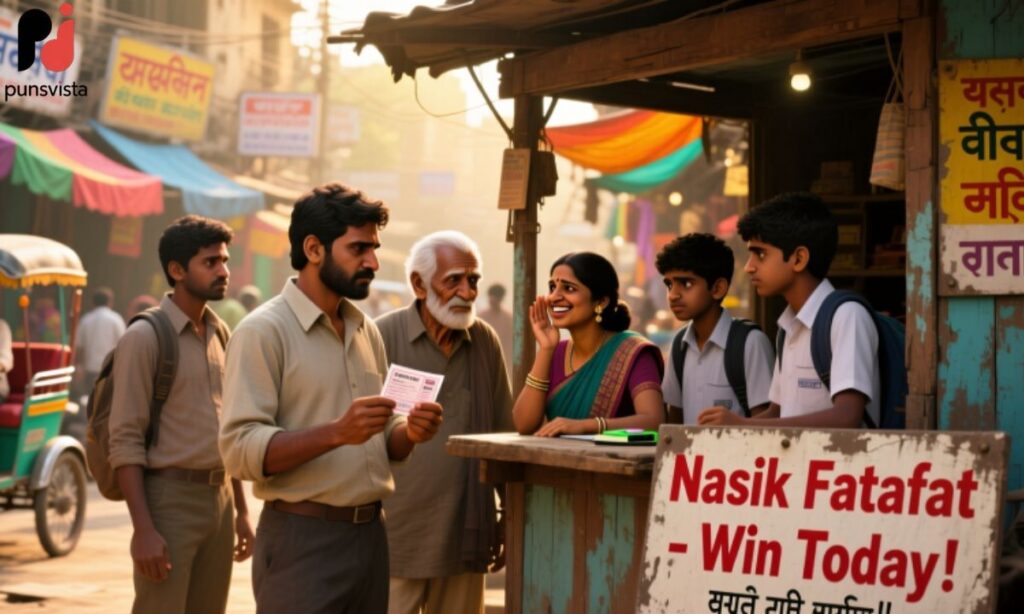
- The thrill of quick results creates an adrenaline rush that keeps players coming back daily.
- Many participants view it as affordable entertainment that costs less than other leisure activities.
- The dream of winning big with minimal investment appeals to people across economic backgrounds.
- Social bonding occurs as friends and neighbors discuss numbers and strategies together regularly.
- Some players believe in lucky numbers based on dreams, events, or personal superstitions.
- The game offers instant gratification unlike traditional lotteries that have weekly or monthly draws.
- Financial stress drives many to try their luck hoping for a quick solution to money problems.
- Community culture normalizes the activity making it a socially accepted form of entertainment.
- The simplicity of the game requires no special skills or knowledge to participate.
- Peer influence plays a significant role as people join because their social circle participates.
- Success stories of winners circulate widely creating hope and inspiration among potential players.
- The low entry barrier makes it accessible even to those with limited disposable income.
- Boredom and lack of alternative entertainment options push people toward such activities.
- The psychological phenomenon of near misses keeps players engaged and hopeful for next time.
- Some view it as a calculated risk rather than pure gambling behavior.
The legal landscape: what’s permitted in Maharashtra and across India
- India’s gambling laws vary significantly from state to state creating a complex legal framework.
- Maharashtra has specific legislation governing lotteries and betting activities within its jurisdiction.
- The Public Gambling Act of 1867 still forms the backbone of gambling regulations nationwide.
- State governments have the constitutional power to regulate gambling within their territories independently.
- Some states have completely banned lotteries while others permit state run lottery systems.
- The legality of games like Nasik Fatafat often exists in grey areas of the law.
- Online gambling and betting face different regulations compared to physical lottery systems.
- Authorized lotteries must obtain licenses from state governments to operate legally in India.
- Many regional betting games operate without proper legal authorization creating compliance issues.
- Law enforcement agencies periodically crack down on unauthorized gambling operations across Maharashtra.
- The distinction between games of skill and games of chance determines legal classification.
- Courts have delivered various judgments attempting to clarify what constitutes legal gambling activity.
- Taxation policies on lottery winnings are clearly defined under Indian income tax laws.
- Maharashtra permits certain forms of betting while prohibiting others under state specific legislation.
- The legal status of such games can change based on new legislation or court rulings.
Real risks and harms: what to watch for

- Financial addiction can develop rapidly leading to severe debt and economic hardship for families.
- Players often chase losses by betting more money trying to recover previous investments unsuccessfully.
- The illusion of control makes people believe they can predict outcomes in purely random games.
- Family relationships suffer when household income gets diverted toward gambling activities regularly.
- Mental health issues including anxiety and depression can arise from continuous gambling losses.
- Children’s education and basic family needs may be neglected when gambling becomes prioritized.
- Some players resort to borrowing money at high interest rates to fund their betting habits.
- The probability of losing is mathematically higher than winning in all such lottery systems.
- False promises and scams operate alongside legitimate games exploiting desperate participants.
- Social stigma and shame prevent problem gamblers from seeking help or admitting their struggles.
- Workplace productivity decreases when employees become preoccupied with gambling activities and results.
- Domestic violence incidents sometimes increase when gambling losses create financial stress at home.
- Criminal activities may be pursued by desperate individuals trying to fund their gambling addiction.
- The constant cycle of hope and disappointment takes a severe emotional toll on regular players.
- Youth exposure to gambling culture can normalize risky financial behaviors from an early age.
How to check Nasik Fatafat results reliably
- Official result boards are displayed at authorized ticket selling centers immediately after each draw.
- Many operators maintain websites where results are posted within minutes of draw completion.
- Players should verify results only from trusted sources to avoid misinformation and scams.
- Local newspapers sometimes publish daily results for various lottery games including regional ones.
- Mobile apps claiming to show results should be downloaded only from verified legitimate sources.
- Cross checking results across multiple official platforms ensures accuracy and prevents fraud.
- Authorized agents can confirm winning numbers and validate tickets for prize claims directly.
- Social media pages run by operators post regular updates but require verification of authenticity.
- SMS services offered by some operators send result notifications directly to registered players’ phones.
- Timing of result announcements follows a consistent schedule that regular players learn to track.
- Screenshot results from unknown sources may be manipulated and should not be trusted blindly.
- Physical verification at official centers remains the most reliable method for confirming wins.
- Community notice boards in local areas display results for public viewing and transparency.
- WhatsApp groups dedicated to the game share results but verification from official sources is essential.
- Keeping ticket stubs safe is crucial for claiming prizes and verifying results against official announcements.
Tips and rules to play Nasik Fatafat smartly
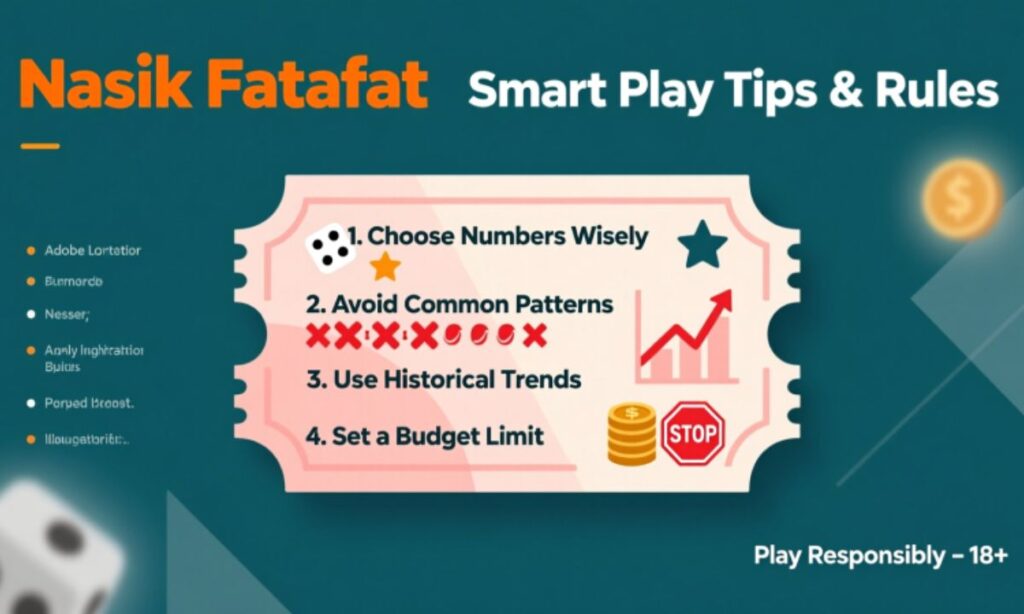
- Set a strict budget before playing and never exceed it regardless of losses or wins.
- Treat the game as an entertainment expense rather than an investment or income generation strategy.
- Never borrow money or use funds meant for essential expenses to purchase lottery tickets.
- Understand that each draw is independent and past results have no influence on future outcomes.
- Avoid falling for tipsters or predictors who claim to have inside knowledge of winning numbers.
- Play only through authorized and recognized agents to ensure legitimate ticket purchases and claims.
- Keep detailed records of all ticket purchases and results to monitor spending patterns honestly.
- Take regular breaks from playing to maintain perspective and avoid developing compulsive behavior.
- Share your gambling activities with trusted family members who can provide accountability and support.
- Recognize warning signs of addiction such as hiding tickets or lying about spending amounts.
- Remember that the house always has a mathematical edge in all lottery type games.
- Celebrate small wins but withdraw and use them wisely rather than reinvesting everything immediately.
- Educate yourself about probability and odds to maintain realistic expectations about winning chances.
- Seek professional help immediately if gambling starts affecting relationships, work, or mental health.
- Consider opportunity costs by thinking about what else that money could provide for your family.
Table: Nasik Fatafat vs State Run Lotteries: a quick comparison
- State run lotteries are fully legal and regulated while regional games often operate in grey areas.
- Official lotteries have transparent draw processes with government oversight and auditing requirements.
- Prize structures in state lotteries are predetermined and publicly disclosed before ticket sales begin.
- Taxation on winnings from state lotteries is clearly defined and automatically deducted at source.
- State lotteries typically have less frequent draws compared to multiple daily rounds in Nasik Fatafat.
- The ticket prices and minimum bets differ significantly between regional games and official lotteries.
- Consumer protection mechanisms are stronger for state authorized lotteries with formal complaint processes.
- Winning claims in official lotteries follow documented procedures with banking integration for large amounts.
- The social perception and stigma differ between participating in state lotteries versus regional betting games.
- Revenue from state lotteries contributes to government welfare programs while regional games serve private interests.
Case study (composite, anonymized): A cautionary near-win

- Rajesh, a factory worker, started playing with just fifty rupees hoping to supplement his modest income.
- His first small win of five hundred rupees convinced him that luck was finally on his side.
- The near miss experiences where his numbers were just one digit off kept him playing daily.
- Over six months, he gradually increased his betting amounts believing a big win was imminent.
- Family grocery money began disappearing as he prioritized ticket purchases over household needs.
- His wife noticed unexplained cash shortages but Rajesh hid his growing gambling involvement from her.
- The psychological trap of almost winning felt more powerful than actual losses in keeping him engaged.
- He borrowed money from colleagues promising to repay after his expected big win materialized soon.
- The mounting debt reached fifty thousand rupees while his total winnings barely crossed ten thousand.
- His children’s school fees went unpaid as he chased the elusive jackpot that always seemed within reach.
- Family relationships deteriorated when his wife discovered the extent of financial damage he had caused.
Community behaviour and cultural patterns: how the game lives locally
- Morning tea stalls become informal discussion hubs where men analyze previous results and share predictions.
- Certain numbers gain popularity based on local events, festivals, or dreams shared within the community.
- Vendors selling tickets often become trusted advisors whom players consult before making number selections.
- Success stories spread rapidly through word of mouth creating temporary heroes in neighborhood circles.
- Group betting pools form among coworkers or friends who collectively purchase tickets sharing potential winnings.
- Elder family members sometimes pass down lucky number combinations considered auspicious across generations.
- The game creates a distinct daily rhythm with crowds gathering at specific times before draws.
- Local superstitions influence number choices including birthdays, vehicle numbers, and religious dates.
- Women’s participation remains limited due to social stigma though their influence on household spending is significant.
- Result announcement times see peak activity at designated centers with anxious crowds checking outcomes together.
- The game has generated its own vocabulary and jargon understood only within participating communities.
- Seasonal patterns emerge with increased participation during festival times when people have extra cash.
- Smartphone penetration has changed how younger players access results and share strategies through social media.
Responsible play and help resources

- National helplines for gambling addiction provide free counseling and support in multiple Indian languages.
- Setting personal spending limits before starting to play helps maintain control over gambling behavior.
- Family involvement in financial decisions creates natural accountability preventing excessive secret spending.
- Recognizing that gambling should never be a solution to financial problems is crucial for responsible behavior.
- Regular self assessment using addiction screening tools helps identify problematic patterns before they escalate.
- Support groups modeled on Alcoholics Anonymous exist in major cities for gambling addiction recovery.
- Professional counselors specializing in behavioral addictions can provide personalized intervention strategies and therapy.
- Taking mandatory breaks after consecutive losses prevents the dangerous cycle of chasing money desperately.
- Honest conversations with trusted friends about gambling habits can provide external perspective and warnings.
- Financial literacy programs help people understand probability, risk, and the mathematics behind lottery games.
- Community awareness campaigns educate about gambling harms without moralizing or creating additional stigma around seeking help.
- Online resources and forums connect problem gamblers with others in recovery creating peer support networks.
How Nasik Fatafat fits into India’s broader lottery and gaming scene
- Regional lottery games like Nasik Fatafat exist alongside official state lotteries throughout various Indian states.
- The Indian gaming market includes traditional lotteries, horse racing, casinos in specific states, and emerging online platforms.
- Cultural acceptance of gambling varies dramatically across different regions and religious communities within India.
- The distinction between skill based games and pure chance games shapes legal treatment across jurisdictions.
- Technology has transformed how Indians access gambling with mobile apps and online platforms growing rapidly.
- Cricket betting represents a massive informal gambling economy despite being largely illegal across the country.
- State governments derive significant revenue from authorized lottery systems which fund welfare and development programs.
- The lottery industry in India employs thousands of people from ticket sellers to administrators and distributors.
- International online gambling sites target Indian players creating regulatory challenges for authorities attempting control.
- Traditional forms of gambling during festivals like Diwali card games coexist with modern lottery systems.
- The gaming industry debates center on balancing personal freedom, government revenue needs, and social harm prevention.
Practical checklist before you play Nasik Fatafat
- Verify that you have disposable income that is not needed for any essential family expenses.
- Check if the ticket seller is authorized and operates from a legitimate established location.
- Understand the complete rules including how winners are determined and prize claim procedures work.
- Confirm the timing of draws and result announcements so you can check outcomes promptly.
- Decide your maximum spending limit for the day, week, and month before purchasing any tickets.
- Ensure you are mentally prepared to lose the entire amount without emotional distress or financial hardship.
- Discuss your intention with a family member to maintain transparency about household money usage.
- Research the actual odds of winning to set realistic expectations rather than fantasizing about guaranteed returns.
- Identify in advance where and how you will check results from reliable authentic sources only.
- Plan what you will do with winnings if successful including paying debts and saving rather than reinvesting.
Quotes from the field

- A ticket seller admits that most of his regular customers lose money consistently despite occasional small wins.
- A reformed player shares how he lost his shop because he believed his luck would eventually turn around.
- A community leader observes that the game has become a social problem affecting young men disproportionately.
- A wife describes the emotional pain of watching her husband’s gambling destroy their children’s future prospects.
- A psychologist explains that near wins activate the same brain reward centers as actual wins do.
- A police officer mentions that unauthorized gambling operations often have connections to other illegal activities.
- A winner cautions others that his success was pure luck and not a strategy anyone can replicate reliably.
- A social worker emphasizes that gambling addiction is a treatable condition requiring professional intervention not willpower alone.
The future of Nasik Fatafat: likely scenarios
- Increased government regulation may bring regional lottery games under stricter oversight and licensing requirements.
- Digital transformation could push the game entirely online with mobile apps replacing physical ticket vendors.
- Stricter enforcement against unauthorized operators might reduce the number of outlets selling tickets.
- Growing awareness about gambling addiction may lead to mandatory warning labels on tickets and advertisements.
- Integration with formal banking systems could make transactions more transparent and traceable for authorities.
- Consumer protection laws might extend to cover lottery players ensuring fair practices and dispute resolution mechanisms.
- The game could face complete prohibition if social harm evidence becomes overwhelming and politically actionable.
- Technology like blockchain might be adopted to ensure transparent draws and verifiable random number generation.
- Age verification systems could become mandatory to prevent minors from accessing gambling activities easily.
- Competition from legal online gaming platforms may erode the traditional player base over time.
- Economic downturns typically increase lottery participation as people seek desperate financial solutions through luck.
- Social stigma around gambling could intensify with public health campaigns reducing overall participation rates gradually.
- The game might consolidate under fewer large operators rather than numerous small independent ticket sellers.
- Government taxation on winnings could become more stringent affecting the net payout to winners significantly.
- Cross border digital gambling platforms may make regional physical lottery games seem outdated to younger players.
Closing: quick summary and a final word of advice
- Nasik Fatafat represents a popular regional lottery game with significant social and economic implications for participants.
- While the game offers entertainment value the mathematical odds always favor the house over players.
- Legal ambiguities surrounding such games create risks for both operators and participants across Maharashtra.
- The psychological pull of quick results and near wins makes these games particularly addictive for vulnerable individuals.
- Financial losses from regular participation far exceed any entertainment value for the majority of players over time.
- Families suffer the most when gambling activities divert essential household resources toward betting tickets.
- Responsible play requires strict budgeting, transparency with family, and understanding the real odds of winning.
- If you choose to play, treat it strictly as entertainment and never as investment or income generation.
- Watch for warning signs of addiction including secretive behavior, chasing losses, and neglecting responsibilities.
- Help resources exist for problem gambling and seeking assistance demonstrates strength not weakness of character.
- The best financial strategy for most families involves avoiding such games entirely and focusing on savings.
- Remember that no system, strategy, or lucky number can overcome the mathematical disadvantage built into lottery games.
Sources and further reading
- The Public Gambling Act of 1867 provides the historical legal framework for gambling regulations in India.
- Maharashtra State Gazette publications contain official notifications about authorized lottery operations within the state.
- Academic research papers on gambling behavior in India offer insights into psychological and social factors.
- The Lotteries Regulation Act governs how states can organize and regulate lottery systems across the country.
- Reports from organizations like the National Centre for Responsible Gaming document gambling related harm statistics.
- Supreme Court judgments on gambling and betting cases clarify legal interpretations of games of chance.
- Books on behavioral economics explain cognitive biases that make people susceptible to gambling activities.
- Government welfare department studies reveal the social impact of gambling on low income communities.
- International research on lottery systems provides comparative perspectives on regulation and harm reduction strategies.
- Local newspaper archives document the evolution and controversies surrounding regional lottery games over decades.
How to Play Nasik Fatafat?
- Begin by locating an authorized ticket vendor in your area who sells Nasik Fatafat tickets legally.
- Choose your preferred betting category whether single digit, double digit, or triple digit number combinations.
- Select the specific numbers you wish to bet on based on personal preference or random choice.
- Decide the amount you want to wager keeping in mind the minimum and maximum betting limits.
- Inform the ticket seller of your number selection and the stake amount you wish to place.
- Pay the required amount in cash to the vendor as digital payments may not be accepted everywhere.
- Receive a printed ticket stub containing your selected numbers, bet amount, draw time, and unique ticket number.
- Keep this ticket safe as it serves as proof of your bet and is required to claim winnings.
- Note the scheduled draw time for your selected game round to know when results will be announced.
- Wait for the draw to take place at the designated time when winning numbers are randomly selected.
- Check the results through official channels immediately after the draw concludes to verify outcomes.
- Match your ticket numbers against the announced winning numbers to determine if you have won anything.
- If your numbers match you must present the original ticket to claim your prize at authorized centers.
- Winners typically need to claim prizes within a specified timeframe after results are declared officially.
- Unclaimed prizes may be forfeited after the deadline so prompt action is necessary for prize collection.
Daily Draw Time Schedule for chosen Slot number
- The first draw of the day typically occurs in the morning around 10 AM for early participants.
- Mid morning slots around 11:30 AM cater to players who prefer later morning participation times.
- Afternoon draws usually take place around 1 PM when lunch break crowds visit ticket counters.
- A mid afternoon round approximately at 3 PM provides another opportunity for working individuals.
- Late afternoon slots around 5 PM coincide with people finishing their workday and heading home.
- Evening draws at 7 PM represent peak participation time when most people are free from daily duties.
- The final draw of the day often occurs around 9 PM giving night shift workers participation opportunities.
- Each draw operates independently meaning results from one round do not influence subsequent draws.
- Ticket sales close approximately 10 to 15 minutes before each scheduled draw time begins.
- Results are typically announced within 5 to 10 minutes after each draw concludes officially.
- Weekend schedules may differ slightly from weekday timings depending on operator policies and demand.
- Festival days might see additional special draws or modified timing to accommodate increased participation interest.
- Players should confirm exact timings with their local vendor as schedules can vary by location and operator.
Why is Nasik’s Fatafat So Famous?
- The game gained popularity due to multiple daily draws offering more opportunities compared to weekly state lotteries.
- Quick result announcements provide instant gratification unlike traditional lotteries with prolonged waiting periods for outcomes.
- Low minimum bet amounts make the game accessible to people across all economic backgrounds and income levels.
- The simplicity of gameplay requires no special knowledge or skills making it easy for anyone to participate.
- Word of mouth success stories spread rapidly creating aspirational appeal among community members seeking fortune.
- Convenient local availability through neighborhood vendors eliminates barriers to access for interested participants everywhere.
- The social aspect of communal result checking and number discussion creates engaging shared experiences among players.
- Cultural acceptance of gambling during festivals has normalized lottery participation as a recreational activity in Maharashtra.
- Economic challenges facing many families create desperation that lottery games exploit promising quick financial relief.
- The psychological phenomenon of variable reward schedules makes the game highly addictive, maintaining player engagement consistently.
- Limited entertainment options in certain areas position lottery games as affordable leisure activities for working class populations.
- The game has developed its own subculture with dedicated followers who treat it as daily ritual behavior.
- Media coverage of winners and jackpots generates publicity attracting new participants hoping to replicate that success.
- Peer influence plays powerfully as friends and coworkers encourage each other to join the betting activity together.
- The name Fatafat itself suggests speed and excitement appealing to people wanting quick outcomes and fast money.
- Vendor networks have established trust relationships with regular customers over years creating loyal player bases.
- The game fills a market gap between expensive casinos and completely free entertainment providing middle ground options.
- Local economic conditions where steady employment is uncertain make speculative activities seem like reasonable alternative strategies.
- Mobile connectivity has amplified the game’s reach by enabling rapid result sharing and community formation online.
- The regulatory grey area allows operators flexibility in payouts and operations attracting both vendors and players seeking advantages.
Nasik Fatafat and Digital Evolution
- The traditional physical ticket system is gradually being complemented by digital platforms and mobile applications.
- WhatsApp groups have become primary channels for sharing results, tips, and creating player communities instantly.
- Online result websites now update within seconds of draw completion eliminating the need to visit physical centers.
- Mobile payment systems like UPI are slowly being adopted by some vendors making transactions faster and traceable.
- YouTube channels dedicated to Nasik Fatafat post daily predictions and analysis attracting thousands of subscribers regularly.
- Digital archives of historical results allow players to study patterns and trends using data analytics tools.
- Social media platforms enable rapid spread of winner stories creating viral marketing effects for the game.
- Smartphone penetration in semi urban areas has dramatically changed how younger players engage with lottery games.
- Online forums and discussion boards let players from different locations share strategies and experiences anonymously.
- The digital shift has made the game accessible to people who previously couldn’t visit physical vendors regularly.
- Screenshots of winning tickets circulate on social platforms though authenticity remains questionable without proper verification.
- Some unauthorized apps claim to provide insider tips or predictions exploiting players’ desperation through digital channels.
- The transition to digital has raised new concerns about cybersecurity, fraud, and protection of player information.
- Technology has enabled faster communication between vendors and players through SMS alerts and push notifications.
- Digital evolution poses regulatory challenges as online operations are harder to monitor than physical ticket booths.
- Virtual communities have formed where experienced players mentor newcomers sharing knowledge about game mechanics freely.
- The anonymity provided by digital platforms may encourage more participation from people avoiding social stigma.
- Online betting platforms competing for the same audience are forcing Nasik Fatafat to adapt or risk losing players.
Step-by-Step Guide to Using Nasik Fatafat
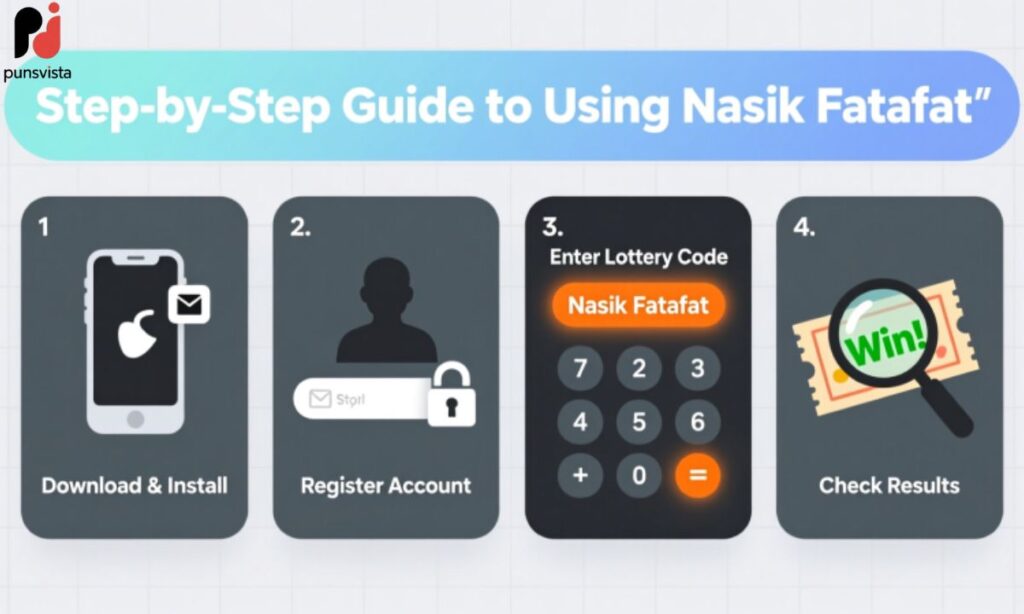
- First research and identify legitimate authorized vendors in your locality through community recommendations or local inquiries.
- Visit the vendor location before draw time to understand their operating hours and available betting options clearly.
- Observe other players if you are new to understand the ticket purchasing process and acceptable number formats.
- Decide on your betting category whether you want to play single numbers, pairs, or triple digit combinations.
- Choose your lucky numbers based on personal preferences, dates, dreams, or simply random selection without overthinking.
- Clearly communicate your selected numbers and stake amount to the vendor ensuring they understand your choices correctly.
- Verify the printed ticket immediately upon receiving it to confirm numbers, amount, draw time, and date are accurate.
- Store your ticket safely in a wallet or secure place as lost tickets cannot be replaced for claiming prizes.
- Make a note of the draw time on your phone or write it down so you remember to check results promptly.
- Avoid purchasing tickets from multiple vendors for the same draw as it complicates tracking and increases spending unnecessarily.
- Wait patiently for the scheduled draw time without anxiety as results will be announced at the predetermined hour.
- Check results immediately after announcement using official display boards at vendor locations or verified online sources.
- Compare your ticket numbers carefully with announced results ensuring you check all digits in correct sequence order.
- If you win, approach the same vendor with your original ticket to initiate the prize claim process following their instructions.
- For smaller winnings collect your prize immediately while larger amounts may require visiting main offices with identification documents.
- Whether you win or lose, maintain your predetermined budget and avoid the temptation to immediately purchase more tickets.
- Keep a personal record of all your bets and outcomes to track spending patterns and make informed decisions about future participation.
Advantages and Disadvantages of Nasik Fatafat
- The primary advantage is the affordable entry cost allowing participation with minimal financial investment initially.
- Multiple daily draws provide frequent opportunities unlike weekly or monthly lottery systems that require long waits.
- Results are announced quickly within minutes satisfying the human desire for instant gratification and immediate feedback.
- The game’s simplicity requires no learning curve or special skills making it accessible to everyone regardless of education.
- Local availability through neighborhood vendors makes participation convenient without traveling to distant locations.
- Small wins occur frequently enough to maintain player interest and create the illusion of profitable activity.
- The social bonding aspect creates community connections as players share experiences and discuss strategies together.
- Cash prizes are distributed immediately for smaller amounts providing instant financial rewards to lucky winners.
- The game offers hope and excitement breaking the monotony of daily routine for working class participants.
- Entertainment value per rupee spent can seem reasonable compared to other leisure activities like movies or dining.
- The major disadvantage is the mathematical certainty that most players will lose money over extended periods.
- Addiction potential is extremely high due to variable reward schedules and the psychological trap of near wins.
- Financial drain on household budgets diverts essential resources away from food, education, and healthcare needs.
- The false hope created by occasional wins masks the cumulative losses experienced by regular participants consistently.
- Family relationships suffer tremendously when gambling activities become secretive and financially destructive over time.
- There is no skill development or productive outcome from participation unlike hobbies that build capabilities.
- The opportunity cost is significant as money spent on tickets could be saved or invested productively instead.
- Legal ambiguity surrounding such games exposes players to potential fraud with limited recourse for complaints.
- Social stigma associated with gambling can damage personal reputation within conservative family and community circles.
- The regressive nature means lower income groups spend proportionately more of their earnings on such activities.
- Mental health deteriorates with anxiety, stress, and depression resulting from continuous losses and mounting debts.
- Time wasted checking results, discussing numbers, and visiting vendors could be used for productive income generation.
- Desperation intensifies as players chase losses leading to increasingly risky financial decisions and borrowing behavior.
- Children’s welfare gets compromised when parents prioritize gambling over educational expenses and nutritional needs.
- No guaranteed returns exist unlike systematic savings or investment schemes that offer predictable growth patterns.
- The game perpetuates poverty by extracting money from vulnerable populations already facing economic challenges daily.
- Lack of consumer protection means unfair practices by operators go unchallenged without proper regulatory oversight mechanisms.
- Health suffers as stress from financial losses manifests in physical symptoms requiring medical attention and expenses.
- Professional life is impacted when workplace performance declines due to preoccupation with gambling activities constantly.
- Retirement security is jeopardized when funds meant for old age get squandered on speculative betting activities.
- The illusion of control keeps players engaged despite knowing logically that outcomes are purely random chance.
- Borrowed money at high interest rates creates debt spirals that become impossible to escape without intervention.
- Women and children often bear the brunt of consequences when male family members develop gambling addictions.
- The normalization of gambling in communities creates intergenerational transmission of problematic financial behaviors patterns.
- Criminal activities may tempt desperate players trying to fund their continued participation through illegal means.
Where to Play Nasik Fatafat?
- Licensed ticket vendors operating from established shops in commercial areas of Nasik city provide authorized access.
- Small stalls and kiosks near busy marketplaces typically sell tickets during operating hours throughout the day.
- Tea stalls and paan shops often double as ticket selling points making them convenient for regular customers.
- Designated lottery centers with official signage are the most reliable locations for purchasing legitimate tickets safely.
- Residential neighborhood shops in densely populated areas serve local communities with easy accessible ticket sales.
- Main road junctions and bus stands commonly have vendors catering to commuters and travelers passing through.
- Industrial area shops near factories attract working class employees during lunch breaks and shift change timings.
- Agricultural market zones serve farmers and rural visitors who come to town for trading produce regularly.
- Religious pilgrimage routes in Nasik have vendors strategically positioned to serve visiting devotees and tourists.
- Railway station vicinity shops cater to daily commuters and passengers with spare time before trains depart.
- Authorized agents display permit numbers or licenses verifying their legitimate status to sell lottery tickets legally.
- Long established vendors with good reputations known in the community offer more trustworthy transaction experiences.
- Avoid purchasing from unauthorized street sellers operating without fixed locations as fraud risks increase significantly.
- Mobile vendors moving between locations should be approached cautiously as accountability becomes difficult if issues arise.
- Online platforms claiming to sell tickets require extreme caution as many are fraudulent operations exploiting unsuspecting players.
- Verify vendor authenticity by asking regular customers in the area about their experiences and reliability records.
- Look for proper ticket printing equipment and official result display boards as indicators of legitimate operations.
- Established shops with permanent structures are preferable to temporary setups that can disappear after collecting money.
- Vendors maintaining consistent operating hours and schedules demonstrate professionalism and commitment to legitimate business practices.
- Community recommendations from trusted neighbors provide the safest guidance for identifying reliable ticket selling locations.
- Areas with high foot traffic typically have multiple vendors allowing comparison of services and reputation assessment.
- Some vendors offer better customer service including result checking assistance and prize claim guidance to regular patrons.
- Avoid isolated or suspicious locations even if tickets are offered at discounted rates as fraud likelihood increases.
- Government authorized lottery offices if available provide the highest level of security and transparency for transactions.
- Shopping complexes and malls occasionally host licensed lottery kiosks with regulated operations and formal receipts.
Explore content categories

- Beginner guides explain fundamental concepts including how lottery systems work and basic terminology used in games.
- Strategy articles discuss number selection approaches though readers should understand no strategy can overcome mathematical odds.
- Legal information sections clarify the regulatory status of lottery games in Maharashtra and across different Indian states.
- Responsible gambling content provides warnings about addiction risks and resources for seeking help when needed urgently.
- Result archives maintain historical data allowing players to review past outcomes and identify statistical patterns if interested.
- Winner stories showcase successful players though these represent rare exceptions rather than typical experiences to expect.
- Comparison guides evaluate different lottery games helping readers understand variations in rules, odds, and prize structures.
- Community forums enable player discussions where participants share experiences, tips, and emotional support with peers anonymously.
- News updates cover regulatory changes, legal developments, and industry trends affecting lottery games and betting activities.
- Educational content explains probability theory helping readers understand the mathematical reality behind lottery game mechanics clearly.
- Financial advice sections guide players on budgeting, setting limits, and treating lottery participation as entertainment expense only.
- Psychology articles examine why people gamble despite unfavorable odds and how cognitive biases influence decision making patterns.
- Health and wellness content addresses the mental and physical health impacts of problem gambling on individuals and families.
- Cultural perspectives explore how different communities view gambling and how social norms influence participation rates regionally.
- Technology reviews evaluate apps, websites, and digital platforms used for checking results and participating in games safely.
- Expert interviews feature insights from addiction counselors, legal experts, and social workers familiar with gambling issues firsthand.
- Statistical analysis presents data on winning probabilities, payout ratios, and expected value calculations for informed decision making.
- Personal finance content demonstrates how saved lottery money could grow through proper investment and systematic saving approaches.
- Family advice sections help relatives recognize addiction signs and learn effective intervention strategies for supporting affected members.
- Regulatory updates inform readers about government policies, licensing requirements, and enforcement actions against unauthorized operators.
- Myth busting articles debunk common misconceptions about lucky numbers, winning patterns, and prediction systems that mislead players.
- Video tutorials demonstrate the ticket purchasing process, result checking methods, and prize claim procedures step by step clearly.
- Testimonial collections include recovery stories from former problem gamblers who successfully overcame addiction with professional help.
- Economic impact studies examine how lottery spending affects household finances and community economic health over time periods.
- Risk assessment tools help individuals evaluate their gambling behavior against clinical criteria for identifying problematic patterns early.
- Alternative entertainment suggestions provide ideas for affordable leisure activities that don’t involve financial risk or addiction potential.
- Youth education content teaches young people about gambling risks before they develop problematic behaviors in adulthood years.
- Women specific resources address unique challenges faced by female gamblers and family members affected by male gambling behavior.
- Senior citizen guidance helps elderly individuals avoid lottery scams and predatory practices targeting vulnerable older populations.
- Mobile app reviews warn about fraudulent applications while highlighting legitimate platforms for safe result checking and information.
- Local resource directories list helplines, counseling centers, and support groups available in Maharashtra for gambling addiction assistance.
- Policy advocacy content discusses potential regulatory reforms that could better protect consumers while respecting personal freedom choices.
- Cross cultural comparisons examine how other countries regulate lotteries and manage gambling related social problems more effectively.
- Frequently asked questions sections address common queries about rules, legality, prizes, and participation procedures comprehensively together.
- Glossary sections define industry specific terms helping newcomers understand the vocabulary used in lottery and gambling contexts properly.
Frequently Asked Questions
What is Nasik Fatafat?
Nasik Fatafat is a quick-play lottery-style game known for fast results and simple rules.
How to play Nasik Fatafat?
You choose a number, buy a ticket, and wait for the scheduled draw result.
What is the timing of Nasik Fatafat?
Nasik Fatafat runs multiple draws daily, usually every hour, depending on local rules.
Is Nasik Fatafat legal?
Legality depends on Maharashtra’s local gaming regulations; rules may vary by region.
How to check Nasik Fatafat results?
You can check results through local retailers or trusted lottery information websites.
Can I play Nasik Fatafat online?
Some platforms share results online, but online participation may not be officially allowed.
What is the price of a Nasik Fatafat ticket?
Ticket prices are usually low and decided by local operators or retailers.
What are Nasik Fatafat winning chances?
Winning chances depend on probability and pure luck since outcomes are random.
Why do people play Nasik Fatafat?
People play for excitement, fast outcomes, and the hope of winning small or big rewards.
How to play Nasik Fatafat safely?
Set limits, avoid overspending, and treat it as entertainment not a way to earn money.
Conclusion
Nasik Fatafat is a fast lottery-style game enjoyed for its simple excitement and thrill.
Players choose numbers and wait for quick results that create instant anticipation daily now.The game attracts many people seeking fun moments with fast outcomes and easy participation.Its simple format makes it popular among those who enjoy thrilling games of chance.
Nasik Fatafat offers frequent draws that keep players engaged and excited throughout each day.Many people play it for entertainment hoping to win small rewards with minimal investment.The game’s quick format adds fun making it a popular choice for casual players.Always play responsibly because Nasik Fatafat depends entirely on luck rather than guaranteed success.

David has 4 years of experience writing engaging pun blogs. With his creative humor and wordplay skills, he now contributes to PunsVista.com, making puns more fun and relatable for readers worldwide.